Where Digital Noise Ends: Why Analog Journaling Reclaims Mental Clarity
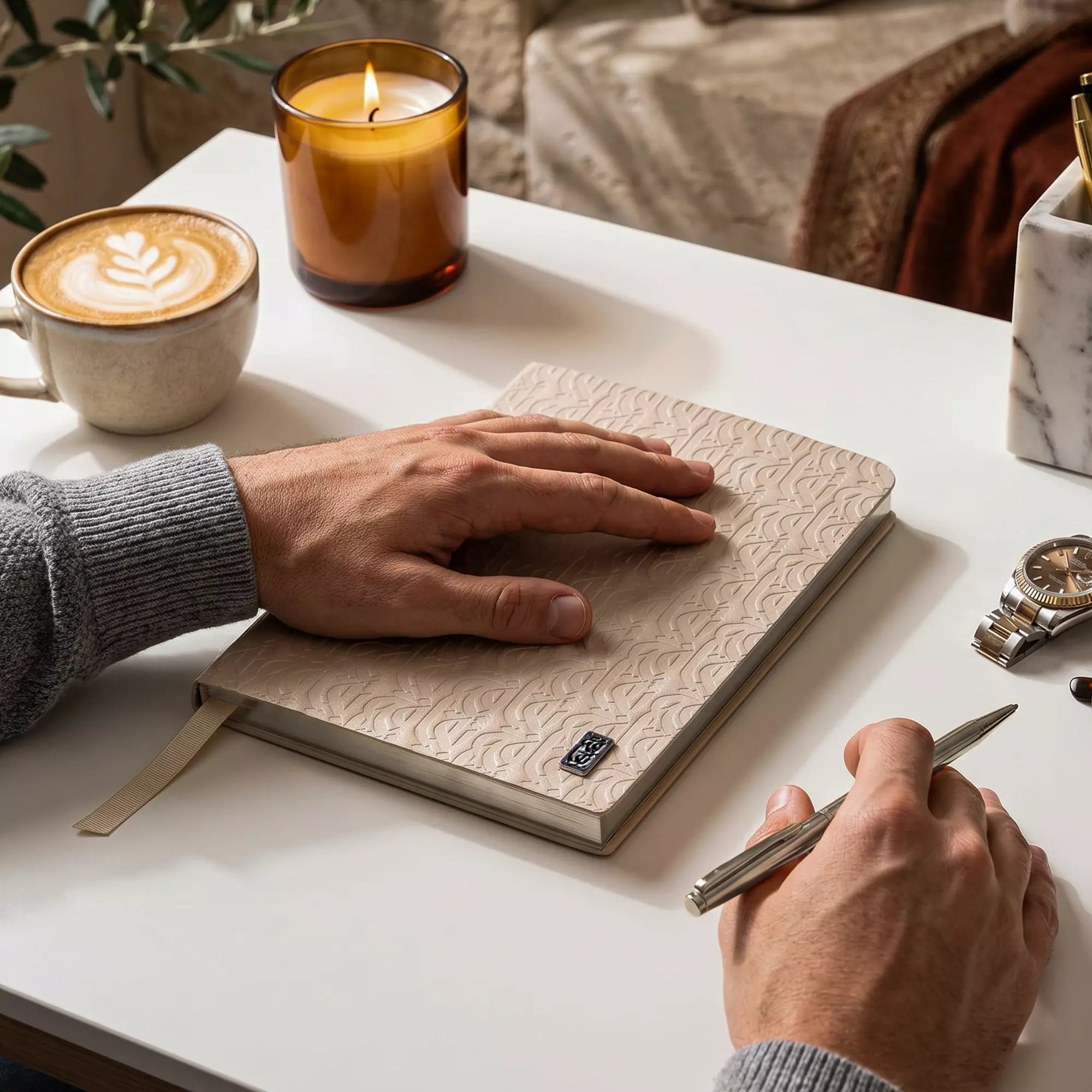
There is a moment, recognised by anyone who has reached for a notebook instead of a screen, when the atmosphere of a room changes. The phone is set face-down. The laptop is closed. A leather cover is opened to a clean page, and the pen held between real fingers, moving across real paper begins to move. Analog journaling for mental clarity is not a productivity technique. It is something older and more necessary: a return to the conditions under which the human mind has always done its clearest thinking. Away from the flicker and the feed, away from the ambient pull of a notification not yet arrived, the thought that was circling finds its landing. The hand steadies. The line forms. And the particular quality of silence that belongs only to a written page settles over the work like morning light over still water.
The Architecture of Digital Noise
To understand what analog journaling restores, it is worth understanding precisely what it displaces.
Digital noise is not simply volume. It is structure a continuous architecture of interruption built into every device and platform we use. The notification is its most visible feature, but the deeper mechanism is subtler: the knowledge, always present at the edge of awareness, that the screen is alive with unread content, unresolved conversations, unmeasured responses. This background hum does not announce itself. It simply occupies cognitive space that might otherwise be available for thought.
Research in attention and cognitive load consistently shows that even the passive presence of a smartphone on a desk not picked up, not consulted reduces available working memory. The mind, it appears, allocates resources to managing potential interruption regardless of whether interruption actually arrives. The digital environment does not need to intrude to exact its cost. Its proximity is sufficient.
The notebook asks nothing of this kind. It does not refresh. It does not notify. It holds what is written in it and waits, with complete patience, for the hand to return.
Analog Journaling for Mental Clarity: The Practice of the Scholars
The instinct to reach for a notebook in moments of mental congestion is not modern. It is ancient, and it was taken seriously.
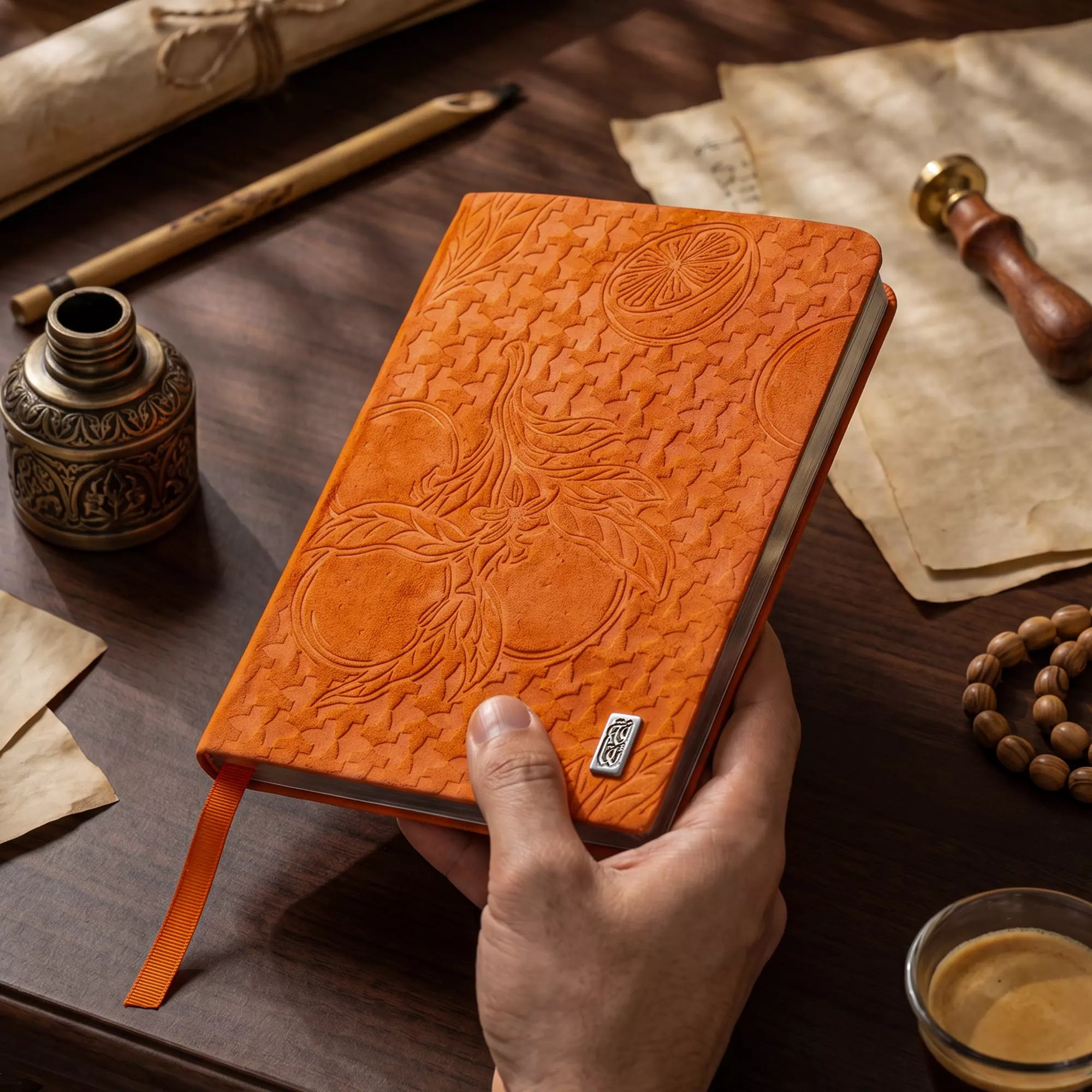
In the intellectual culture of Al-Andalus, the practice of taqyid the recording and ordering of one's own thoughts in writing was considered a discipline as rigorous as formal study. The scholars of Córdoba and Granada did not journal as a form of self-expression in the contemporary sense. They wrote to think to externalise the contents of the mind so that they could be examined, arranged, challenged, and understood. The notebook was a thinking partner, not a diary.
Ibn Hazm, composing in eleventh-century Andalusia, wrote that the examined thought the idea committed to paper and returned to was more trustworthy than the idea held only in memory. The act of writing it down changed its nature: it became observable, rather than merely felt.
This is precisely the mechanism by which analog journaling for mental clarity operates. The page does not simply receive thought. It makes thought visible which is the first condition for being able to work with it honestly.
What the Pen Does That the Keyboard Cannot
Handwriting is slower than typing. This is its most important quality.
When the hand must form each letter when the line between mind and mark is drawn through the physical movement of fingers across paper rather than the mechanical registration of a keystroke the pace of transcription falls just below the pace of thought. This gap is not a limitation. It is a filter. Ideas that are genuinely worth keeping sustain the slight effort of being written by hand. Ideas that are merely habitual, reflexive, or borrowed tend to dissolve before they reach the page.
The result is a quality of thinking that digital note-taking rarely produces: not more notes, but better ones. Not every thought, but the thoughts that bear weight.
There is a sensory dimension to this that matters independently. The grain of leather beneath the palm. The slight warmth of a notebook held for several minutes. The sound intimate and specific of a nib moving across ivory paper. These are not incidental pleasures. They are orienting signals, received by the body before the mind has fully settled, communicating: this space is different. The rules here are different. You may think slowly.
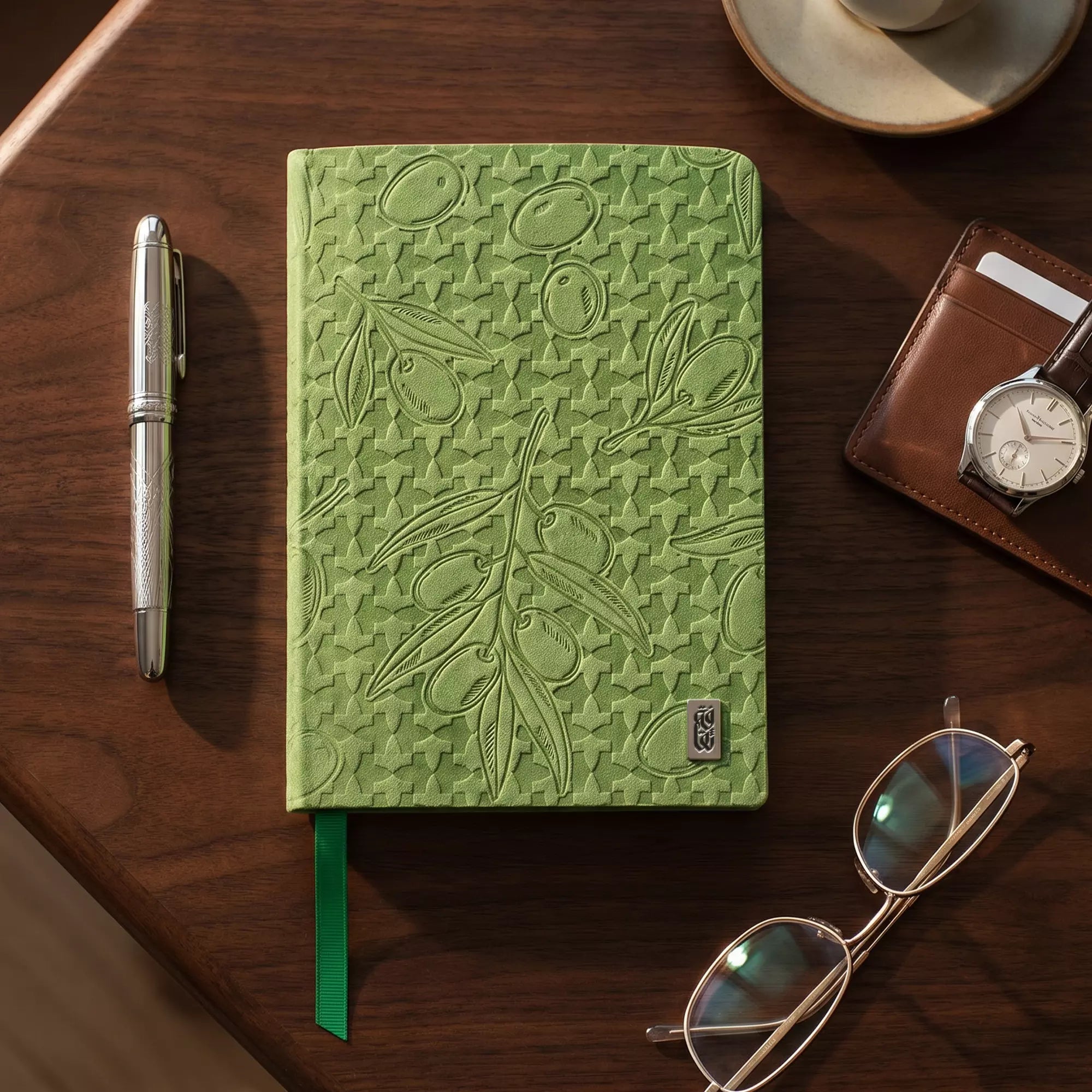
TAKAFA's notebooks were designed with this full sensory encounter in mind. The full-grain leather cover, the lay-flat binding that asks no effort of the hand to hold the page open, the FSC-certified Italian ivory paper that receives ink with warmth rather than resistance each element removes a small obstacle between the intention to write and the act of writing. The result is a physical environment in which analog journaling for mental clarity is not effortful. It is simply what happens when the right conditions are present.
The Cleared Page as a Cleared Mind
There is a principle in the Sufi intellectual tradition of khalwa the value of chosen solitude, of the mind withdrawn from external stimulus into its own considered presence. It was not practised as retreat from the world, but as preparation for it: the mind that has been given quiet returns to its responsibilities with greater acuity, greater steadiness, greater capacity for the difficulty of genuine thought.
Analog journaling operates within this same understanding. The session at the notebook is not an escape from the complexity of a life. It is the practice by which that complexity becomes navigable.
When the contents of the mind are written down the unresolved decision, the recurring anxiety, the half-formed idea that has been circling for days they lose the quality of ambient pressure they held while unrecorded. They become specific. They have edges. They can be looked at directly, rather than felt as a general weight.
This is what the cleared page offers: not solutions, but legibility. The mind that can read its own contents clearly is the mind best equipped to act on them with wisdom.
The Quiet That Thinks
Analog journaling for mental clarity does not compete with digital life. It simply operates in a register that digital tools cannot access the register of the slow, the tactile, the permanent, and the private.
In the great traditions of reflective writing, from the scholarly notebooks of Al-Andalus to the personal journals of the Ottoman court intellectuals, the page was always understood as a space of consequence. What was written there was written with care, because the act of writing conferred weight. The thought set down in ink was a thought taken seriously.
That understanding has not aged. The noise has simply grown louder around it, making the quiet of a good notebook more valuable, not less and the discipline of returning to it more necessary than ever.